
pias wing-tip self-drilling screw, countersunk milling head with AW recess


For detailed information, other images and documents, please select individual articles from the following table.
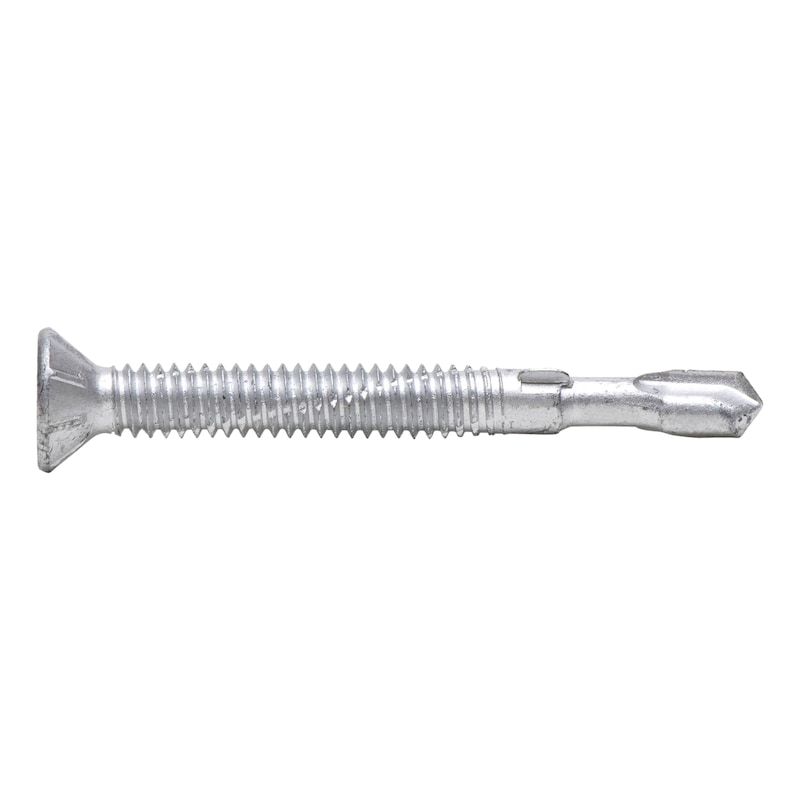


pias wing-tip self-drilling screw, countersunk milling head with AW recess
The self-drilling screw with up to 50% time savings when fastening wood to metal sub-structures

Exclusively for trade customers
Register now and access more than 125,000 products

Variants
Exclusively for trade customers
Register now and access more than 125,000 products
Important features
- Hardened C1 (not stainless steel!)
- RUSPERT-coated (silver)
- Countersunk milling head for use with compact and hard woods and soft and light woods
- AW recess for optimum power transmission and conservation of the corrosion protection
Advantages in comparison to traditional self-drilling screws made from case-hardened steel
- For use with steel substructures with a strength of up to 700 N/mm2
- Faster processing speeds possible
- The drill tip is strong enough for use with reinforced steel substructures
- The wing-tip pias of nominal dia. 6.3 mm can be used in steel substructures made from A2 stainless steel up to 4 mm thick
Notice
- Wing-tip pias screws must be appropriately tested for usability for each application.
- Only install using application tools with a depth stop and claw coupling.
- *Wood thickness and substructure thickness lu = max. attachment length lB
- A suitable drill/driver (e.g. cordless drill/driver with depth stop) must be used with self-drilling screws
- The use of impact drivers is not permitted
- Self-drilling screws must be inserted perpendicular to the surface of the component
Drilling screws may only be used where dampness is not to be expected. For fasteners with a construction permit, the permit, and in particular Part 2 "Special regulations", must always be observed.
Instructions
- 1. Force feeding of the screw is prevented by the wings drilling out the wood
- 2. The core hole is drilled into the substructure. The wings break off upon contact with the metal
- 3. The first few turns of the screw cut the thread, the remainder of the screw then screws into the thread
Select RAL-colour code
!! NOTE: On-screen visualisation of the colour differs from real colour shade!!